Describe it in familiar terms
Start with slow movement, engine lugging or a leak to organise the affected systems and possible checks.

For technicians, workshops and parts advisors: describe a symptom naturally and find fault-code information, technical references and suggested checks.
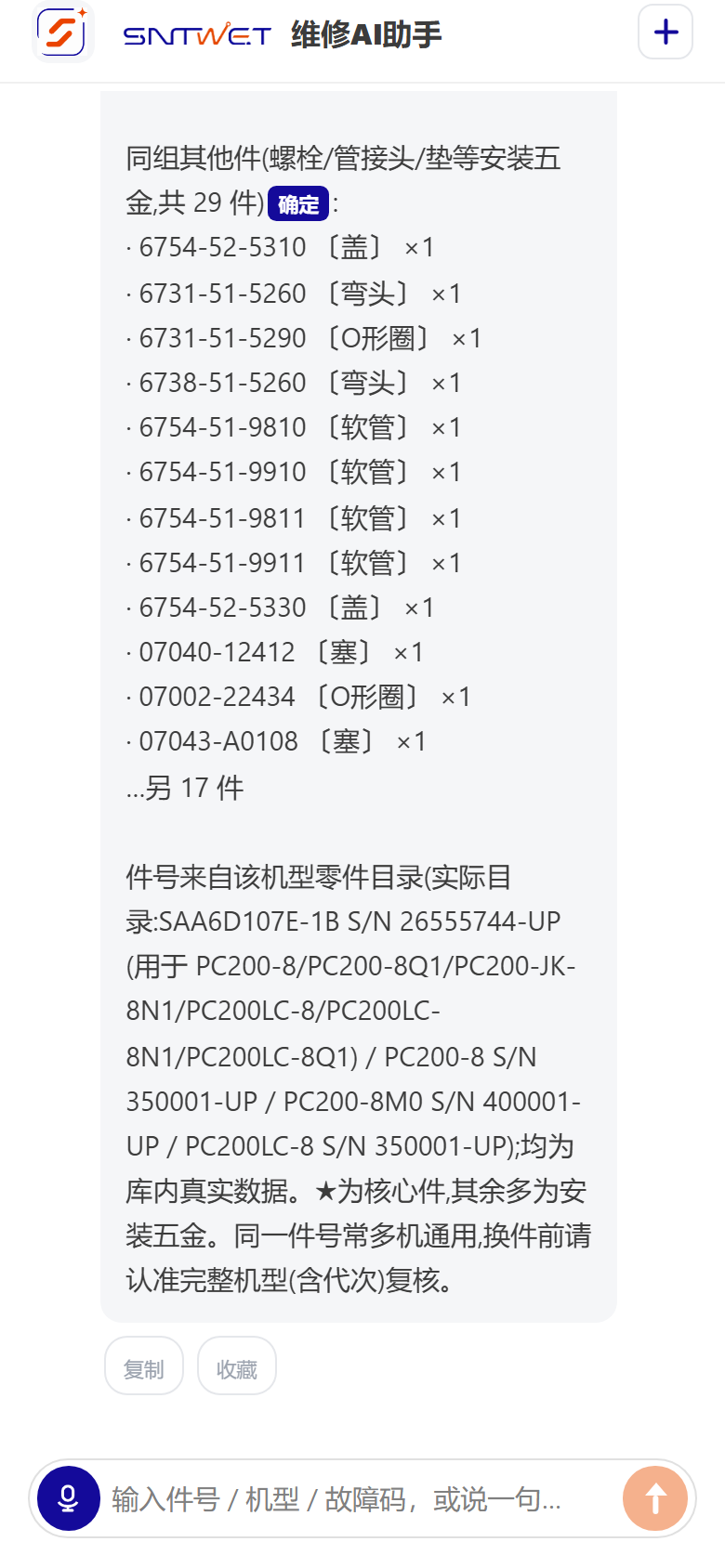
Product interface · Illustrative business figures
Start with slow movement, engine lugging or a leak to organise the affected systems and possible checks.
Find relevant references, meanings and checks using the full model, symptom and fault code.
Use component catalogues and cross-references while checking model generations and fitment conditions separately.
Verified information, candidates and rule-based inferences are labelled separately. Missing evidence is identified as a gap.
Enter the symptom, model or fault code, then ask related follow-ups.
Review sources, related notes and confidence levels.
A qualified technician uses the machine’s actual condition to decide the next action.
The current product is an AI technical-reference assistant, without repair work-order management. Suggested checks support professional judgement and do not replace inspection.
Tell us your role, store or equipment scale and the problem you want to solve. We’ll focus the discussion on your work.
Contact SNTWETTell us what you do and how your team works. We’ll help you find the right product.